Case Study
Nocturnal Cough in a Young Expat — How a Home Doctor Visit Led to an Asthma Diagnosis in Dubai
Date
14 February 2026Client
Nik MorisonCategory
PulmonaryCase Study
Respirtory MedicineType of Service
Therapeutics
RESPIRATORY HEALTH CASE STUDY DOCTOR ON CALL DUBAI
Case study Prepared By Dr Marina
Last Updated: Febraury 2026 | Medical Review: Dr. Marina | DHA Licensed
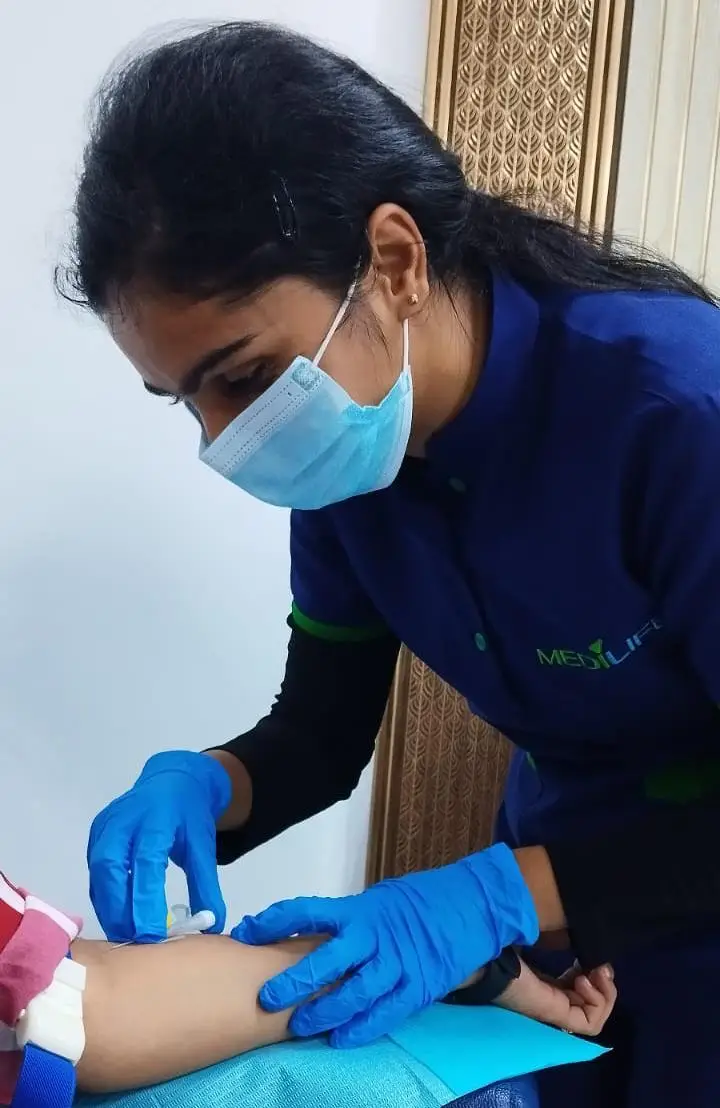
A 22-year-old male with a 2-week history of dry nocturnal cough and breathlessness is diagnosed with bronchial asthma following a MediLife home doctor consultation — avoiding unnecessary A&E visits and receiving same-day clinical care.
PATIENT PROFILE
- Patient age - 22
- Symptom duration - 2 weeks
- Diagnosis achieved - Same day
- Fully asymptomatic - 4 weeks
- DEMOGRAPHICS - 22-year-old male, South Asian expat, Dubai Marina resident
- OCCUPATION - University student, non-smoker, no alcohol use
- LIVING SITUATION - Shared apartment, air-conditioned, older building with dusty ventilation
- FAMILY HISTORY - Mother has allergic rhinitis; paternal uncle has asthma — strong atopic family background
CHIEF COMPLAINT & HISTORY OF PRESENT ILLNESS
The patient presented via MediLife’s doctor on call service with a 2-week history of dry cough — predominantly nocturnal — and associated shortness of breath (dyspnea). Symptoms consistently worsened with exposure to dust, strong perfumes, and cold air-conditioned environments.
No fever, haemoptysis, chest pain, weight loss, night sweats, or changes in appetite were reported. The patient denied any previous episodes of similar symptoms and had no known drug allergies. He reported significantly disrupted sleep due to coughing episodes between 2–4am, affecting his academic performance.
Triggers identified: Dusty indoor environments, strong odors (cleaning products, perfumes), cold air conditioning, and light physical exertion.
Relieving factors: Sitting upright, moving to a well-ventilated area. No medications taken prior to consultation.
PAST MEDICAL, SOCIAL & ALLERGY HISTORY
- PAST MEDICAL HISTORY - Eczema (atopic dermatitis) since age 4 — managed with topical emollients. No hospitalisations.
- MEDICATIONS - No current medications. No previous inhaler use
- ALLERGIES - No known drug allergies. Suspected environmental allergen sensitivity (dust mites, strong fragrances).
- SOCIAL HISTORY - Non-smoker. No passive smoke exposure. No pets. Occasional mild exercise.
PHYSICAL EXAMINATION — HOME VISIT FINDINGS
- Temperature 36.8°C — Afebrile
- Heart Rate 82 bpm — Regular
- Blood Pressure 118/76 mmHg — Normal
- Respiratory Rate 18 breaths/min — Normal
- SpO2 - 97% on room air
- Weight / BMI 71kg / BMI 22.4 — Normal
- Chest inspection - No accessory muscle use, symmetric expansion
- Auscultation - Mild end-expiratory wheeze, bilaterally — no crackles
- Other systems - Cardiovascular, abdominal, ENT — all unremarkable
INVESTIGATIONS & RESULTS
- Spirometry / PFT - FEV1/FVC ratio: 68% (below 70% threshold) — obstructive pattern confirmed
- Bronchodilator Reversibility - 0 FEV1 improved by 15% post-salbutamol — reversibility confirmed, consistent with asthma
- Peak Expiratory Flow (PEF) - 62% of predicted — mild-moderate airflow limitation
- Chest X-Ray - No consolidation, effusion, or hyperinflation. Normal cardiac silhouette.
- Full Blood Count - Eosinophilia noted (0.6 × 10⁹/L) — supports allergic/atopic aetiology
- Total IgE - Elevated at 320 IU/mL — confirms atopic background
DIFFERENTIAL DIAGNOSES CONSIDERED
- Bronchial Asthma — confirmed. Supported by nocturnal symptoms, atopic history, reversible obstruction on PFT, eosinophilia, and elevated IgE.
- Gastro-oesophageal Reflux Disease (GERD) — excluded. No heartburn, regurgitation, or post-meal worsening reported
- Allergic Rhinitis with post-nasal drip — partially contributing. Patient reports occasional nasal congestion; rhinitis co-management advised.
- Vocal Cord Dysfunction — excluded. No inspiratory stridor, no episodic complete breathlessness, symptoms consistent with lower airway origin.
- Respiratory tract infection — excluded. No fever, purulent sputum, or infective symptoms.
MANAGEMENT PLAN
Inhaled corticosteroid (ICS):
Low-dose Budesonide 200mcg inhaler — twice daily as controller therapy
Short-acting beta-agonist (SABA):
Salbutamol 100mcg inhaler — as needed for acute relief (rescue inhaler)
Inhaler technique education:
Demonstrated correct spacer use and breath-hold technique during home visit
Trigger avoidance counselling:
Advised HEPA air purifier for bedroom, dust mite-proof mattress covers, avoid strong chemical odors
Asthma Action Plan:
Written personalised plan provided — green/amber/red zones based on symptoms and PEF
Allergic rhinitis:
Intranasal corticosteroid spray (Fluticasone) prescribed for co-existing rhinitis
Follow-up:
Scheduled teleconsultation at 2 weeks and in-person review at 4 weeks with repeat spirometry
Referral:
Allergy testing referred to assess for specific IgE sensitisation (dust mite, mould)
Outcome at 4-week follow-up: Patient fully asymptomatic. Sleeping through the night without coughing episodes. Repeat PFT showed FEV1/FVC ratio improved to 78%. Inhaler technique confirmed correct. Academic performance restored. No A&E or hospital visits required.
PATIENT EXPERIENCE

Ahmed
“I had no idea a cough could be asthma — I thought I just had allergies. The doctor came to my apartment within the hour and explained everything clearly. I didn’t have to take a day off or sit in a hospital. Within a month I was sleeping properly for the first time in weeks.”
— Ahmed, 22, university student, Dubai Marina (name changed for privacy)
CLINICAL INSIGHT
Key learning points: Bronchial asthma should always be considered in young adults presenting with nocturnal dry cough and a personal or family history of atopy (eczema, rhinitis, or asthma). In Dubai’s climate — with year-round air conditioning, high dust exposure, and strong fragrance use — environmental triggers are particularly prevalent among the expat population. Early spirometric confirmation and prompt initiation of inhaled corticosteroid therapy prevents disease progression and significantly improves quality of life. MediLife’s doctor on call service enabled same-day diagnosis and treatment in the comfort of the patient’s home — without the stress or delay of an emergency department visit.
Disclaimer: Patient details have been anonymised and consent obtained for educational publication. This case study is for informational purposes only and does not constitute medical advice. Individual results may vary. Always consult a qualified medical professional for personal health concerns.
554
k554
kSaved hearts
554
k554
ksaved tooth
554
k554
kHappy Patients